Can a Virtual Office Scan Your HMRC and Companies House Letters?
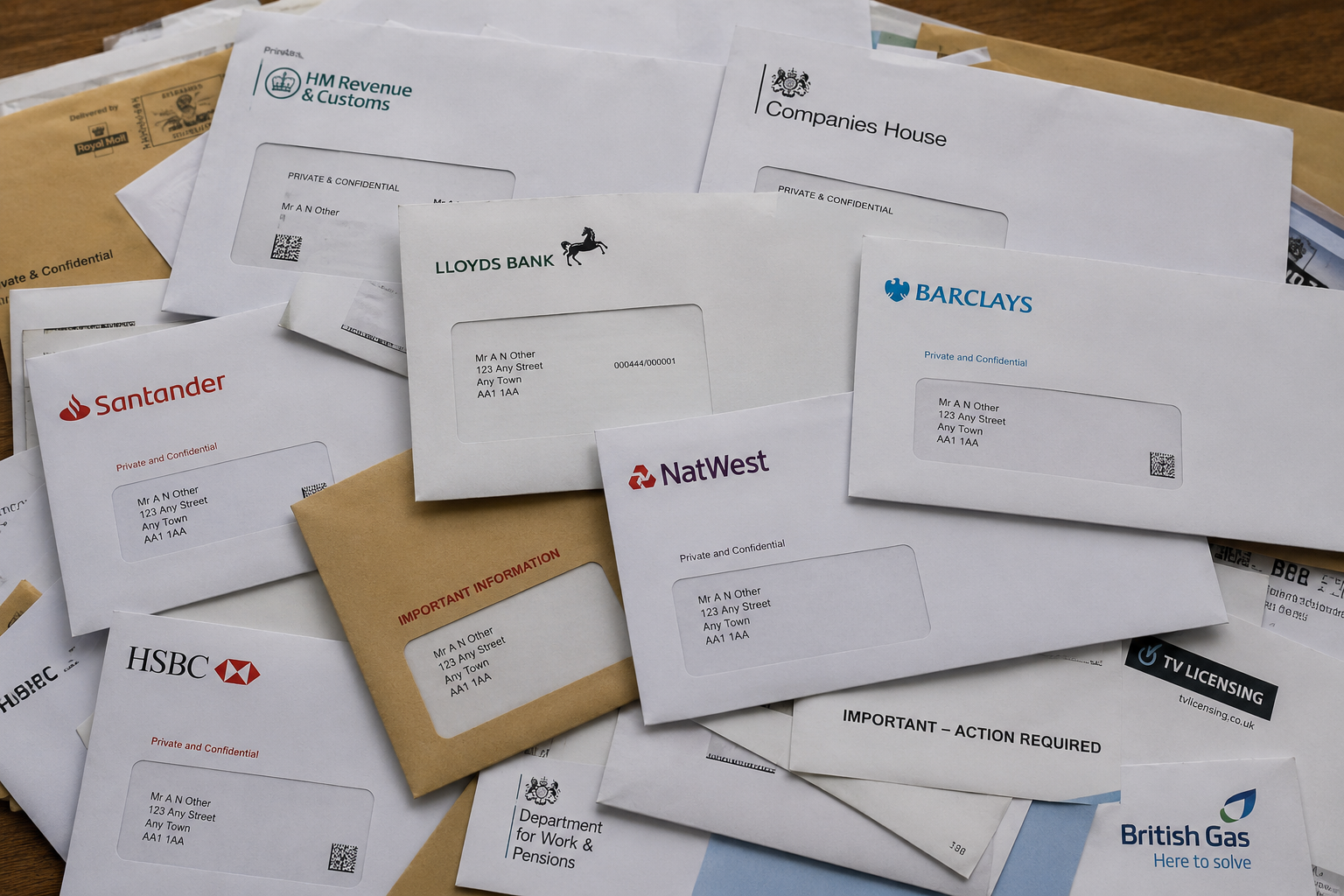
Let's be honest. Nobody gets excited about receiving letters from HMRC or Companies House.
But when one of those letters arrives, you probably want to know about it sooner rather than later.
Whether it's a tax-related letter, a reminder about a filing deadline or an important company notice, keeping track of official correspondence is part of running a limited company. But what happens if you use a virtual office? Can your provider scan these letters and send them to you digitally?
The short answer is yes, provided your chosen service covers this type of correspondence.
However, there are a few things you need to understand before signing up.
Let's get into it.
First, What Is a Virtual Office?
A virtual office allows you to use a business address without renting a traditional physical office. Depending on the provider and package you choose, you may be able to use the address for company registration, receive business post and access additional services such as mail forwarding or mail scanning.
And here's why that matters.
You don't necessarily need to be physically present at an office to manage your business correspondence. With the right mail handling service, you can receive updates about your post while working from home, travelling or even living abroad.
But not all virtual office packages offer the same services. That's particularly important when it comes to HMRC and Companies House letters.
Can a Virtual Office Scan HMRC Letters?
Yes, a virtual office provider can offer a mail scanning service for eligible HMRC correspondence, provided this is included in the service you have purchased and the provider handles that type of mail.
Think about it.
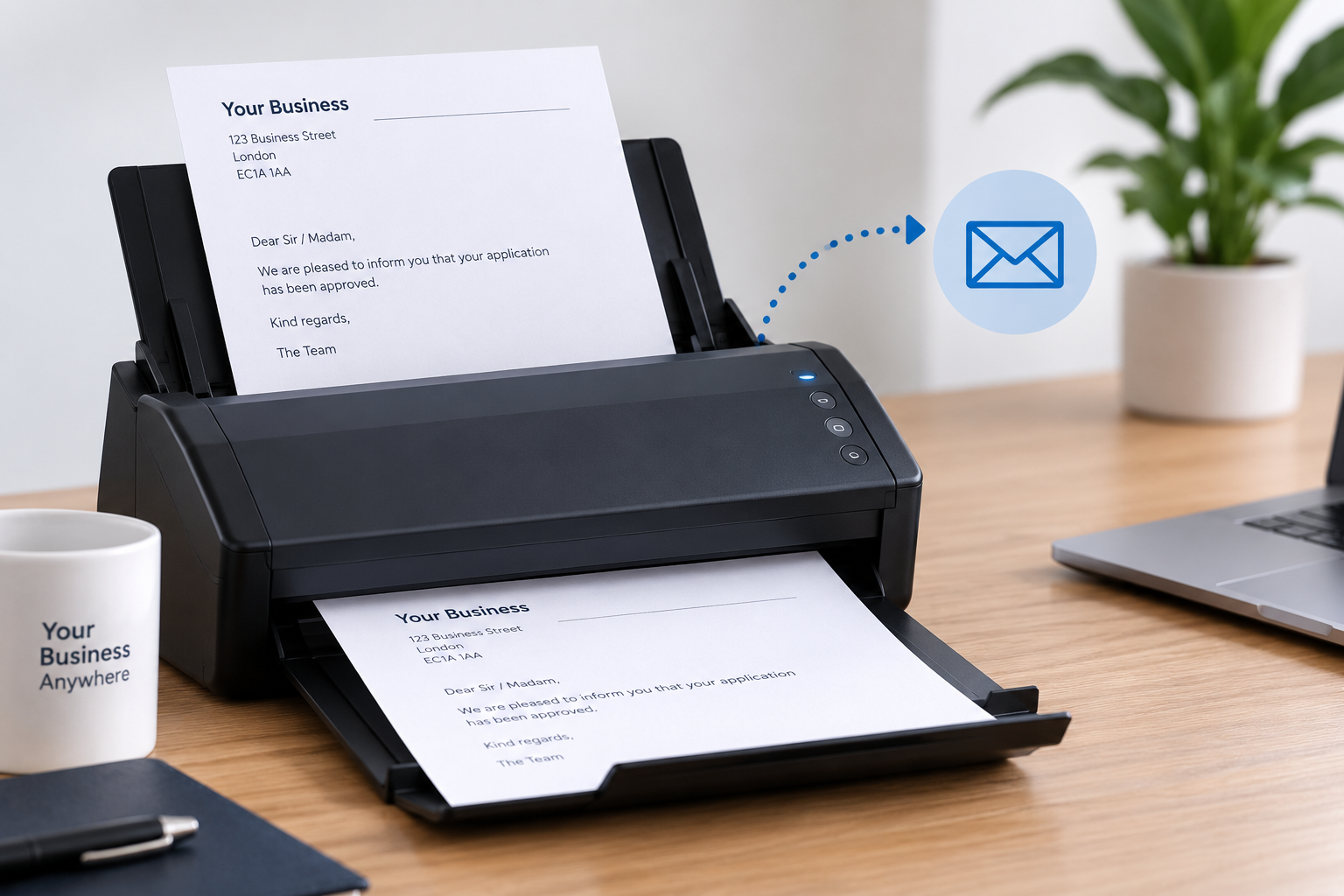
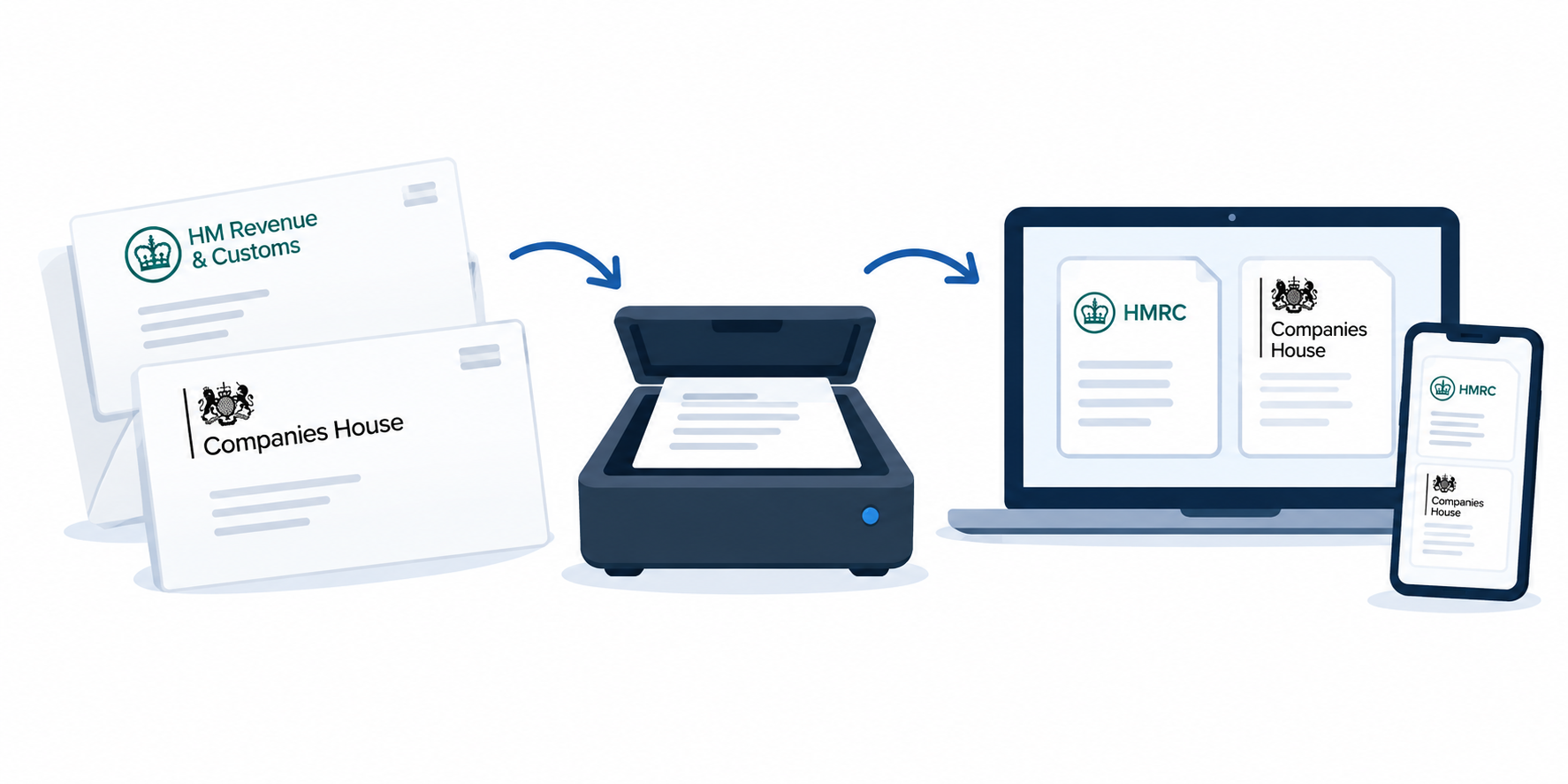
Your company receives a letter from HMRC while you're working from home or away on business. Rather than having to visit an office to read it, a scanning service can open the letter, scan the contents and send you a digital copy.
This can make it easier to review your correspondence and decide what action you need to take.
However, there is an important distinction to remember.
Receiving a scanned copy doesn't mean HMRC has contacted you electronically or that any required action has been completed.You are still responsible for reviewing the letter, meeting any relevant deadlines and responding where necessary.
It's also worth checking how your provider handles different types of HMRC correspondence, particularly if a letter contains sensitive information or requires you to retain an original document.
What About Companies House Letters?
The same principle applies to Companies House correspondence. If your company uses a registered office address provided by a virtual office company, official post sent to that address can be handled through the provider's mail service.
Where mail scanning is available for that correspondence, you can receive a digital copy without needing to collect the physical letter yourself.
For example, you might receive correspondence relating to your company's records or filing obligations.Being able to review that letter remotely can make managing your company more convenient, especially if you don't work from a permanent office.
But here's something you shouldn't overlook.
Companies House also communicates electronically. Companies must provide a registered email address and read emails sent to it. A physical mail scanning service does not replace this requirement.
So, if you want to stay on top of your company's correspondence, it's sensible to monitor both your physical post and your official email communications.
Does Every Virtual Office Include HMRC and Companies House Mail Scanning?
No, and this is where you need to be careful. Some virtual office providers offer registered office services without including mail scanning. Others may offer scanning as an optional extra or restrict which types of correspondence can be handled under a particular package.
You should never assume that purchasing a business address automatically means all your official letters will be scanned.
Before signing up, check three things:
- Registered office service: Can you use the address as your company's registered office?
- Mail handling: Does the provider accept and process HMRC and Companies House correspondence?
- Scanning service: Will eligible letters be opened, scanned and sent to you digitally?
Why go through all this?
Because the type of address service you purchase matters just as much as the scanning service itself. For example, a general business or trading address may not include the right to use that address as your registered office or to receive official correspondence under your particular package. Make sure you choose a service that covers what your business actually needs.
What's the Difference Between a Registered Office Address and a Business Address?
This is a common point of confusion. Although the two services sound similar, they can serve different purposes.
A registered office address is the official address recorded at Companies House for your limited company. It is where formal company correspondence may be sent.
A director's service address is the address recorded for a director to receive correspondence in their capacity as a director. It is publicly available on the Companies House register.
A business or trading address is an address a business may use for general correspondence, its website, invoices or other business purposes, depending on the provider's terms.
Why does this matter when choosing mail scanning?
Because the address you use determines what correspondence may be sent there, while your service agreement determines what the provider will handle and whether scanning is included.
If you want to receive both company and director correspondence, check that you have purchased the appropriate address services. It's much better to clarify this before you start using an address than to discover later that a particular type of letter isn't covered.
Is It Safe to Have HMRC and Companies House Letters Scanned?
It's a fair question.
Official correspondence can contain confidential business information, so you should take care when choosing a provider to handle it.
Before signing up, consider the following:
- Privacy and security: Ask how scanned documents are handled and delivered.
- Access to correspondence: Check who can access your mail and digital copies.
- Original documents: Find out whether original letters can be forwarded if required.
- Turnaround times: Understand how quickly letters are normally processed.
- Service limitations: Check whether certain correspondence is excluded from scanning.
You should also consider whether you need to retain particular original documents for your records. A digital copy can be convenient, but it isn't automatically a substitute for every original document.
What If You Receive an Important HMRC Letter While Abroad?
Imagine you're running a UK limited company but spending several months overseas.You don't have a traditional office, and you can't simply pop in to collect your post.
Now imagine an important letter arrives at your registered office. Without a suitable mail handling arrangement, you could find it more difficult to access that correspondence promptly.With a mail scanning service, eligible letters can be scanned and sent to you digitally, allowing you to review them remotely.
Of course, the actual turnaround depends on your provider's procedures, and scanning doesn't guarantee that every letter will be processed immediately. The key is to choose a provider with clear mail handling procedures and to keep your contact details up to date. That way, you have a practical arrangement for managing physical correspondence while running your business from elsewhere.
How Does Mail Scanning Work at London Virtual Address?
At London Virtual Address, we understand that business owners need a practical way to manage their post without constantly visiting an office. Our mail scanning service is designed to help eligible customers access their physical correspondence digitally. Depending on the address service you have purchased and the type of correspondence received, the process generally involves:
1. We receive your mail.
Letters addressed to your company arrive at the relevant address covered by your service.
2. Your correspondence is processed.
Eligible letters are handled in accordance with your service arrangements and mail handling procedures.
3. Your letters are scanned.
Where scanning is included and the correspondence is eligible, the letter is opened and scanned.
4. You receive a digital copy.
You can review the scanned correspondence remotely and decide whether further action is required.
Need the original letter? Physical mail forwarding may also be available under the relevant service terms.
The important thing is to ensure that your chosen package covers the type of mail you expect to receive.
You can find out more on our Mail Scanning Service page
So, Can a Virtual Office Scan Your HMRC and Companies House Letters?
Yes, a virtual office can provide this service, but you need to choose a provider and package that cover the relevant correspondence. Before signing up, make sure your registered office or director's service address requirements are covered, confirm whether HMRC and Companies House letters are eligible for scanning, and understand how your physical mail will be handled.
Remember, receiving scanned copies can make managing correspondence easier, but you are still responsible for reading your letters, monitoring official emails and meeting any relevant deadlines.